book review · Gödel, Escher, Bach
Gödel, Escher, Bach by Douglas Hofstadter
2026-03-14 · 3 min read
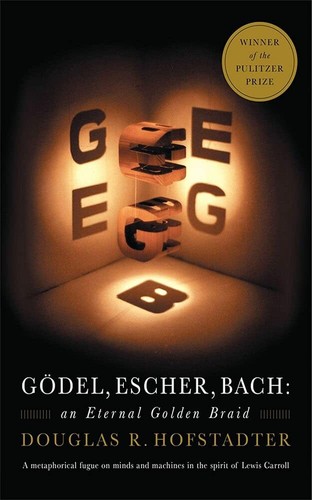
This one took me most of a summer, on and off, which is not something I say about many books. Hofstadter’s whole project is using Gödel’s incompleteness theorems, Escher’s impossible staircases, and Bach’s fugues as three different lenses on the same underlying question, how does a mind get self-aware out of dumb mechanical parts that individually know nothing about awareness at all. He weaves it through invented dialogues starring Achilles and a Tortoise, riffing on Lewis Carroll’s old logic puzzles, in between denser technical chapters on formal systems and recursion.
It shouldn’t hold together as a book. A math book, an art book, and a music theory book stitched into one long argument about consciousness sounds like a recipe for something unreadable. Somehow the dialogues carry you through the harder stretches, they’re playful enough that you don’t notice you’re being taught predicate logic until you’re halfway through and it’s already in your head. The Escher plates do real argumentative work too, not just decoration, the strange loops in his drawings are the same structural trick Hofstadter is arguing your brain runs on.
I won’t pretend every chapter landed for me. Some of the deeper formal logic sections dragged, and there were stretches where I set the book down for a week and came back cold. But the core idea, that meaning and self-reference can bootstrap themselves out of syntax with no meaning built in at the ground floor, rearranged how I think about what a mind even is. Not many books do that.
Worth knowing going in: this is not light reading, and there isn’t a large pile of quick reviews of it out there to lean on, people who finish it tend to just say something like “good” and leave it at that, understandably, because summarizing this book in a sentence is basically impossible. Best just to read it yourself.