book review · Starfish
Starfish by Peter Watts
2026-03-22 · 3 min read
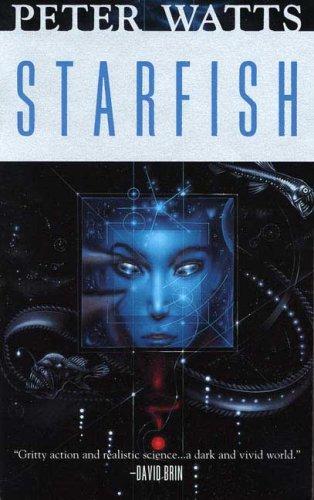
Watts picked his cast for Starfish like he was daring the reader to feel bad for them. The crew running the Beebe deep-sea station are, more or less on purpose, people who wouldn’t function on the surface, abuse survivors, sociopaths, people who feel more at home in crushing black water than they ever did around other humans. It’s a genuinely unsettling premise once it clicks: put the psychologically damaged where the pressure won’t kill them, because the pressure is the only thing that makes sense to them.
The tech is where Watts earns his hard-SF label honestly. He’s leaning on real deep sea biology, actual geothermal vent ecosystems, the kind of chemosynthetic weirdness that lives down there without sunlight, and it never feels like set dressing. Somewhere in the back half there’s a quiet line about how simulations are almost always better than real life, and real life gets blamed for the poor showing, and that sentence has stuck with me longer than most of the plot beats.
I’ll be honest, this isn’t as tightly wound as Blindsight, which I read afterward and probably should have read first given the order they came out. Starfish hums and crackles with the same manic energy but doesn’t have that crystalline unity of theme and character locking together. It’s messier, more claustrophobic, an intimate apocalypse instead of a cosmic one. Some of that is because it’s book one of a trilogy and reads more like an opening movement than something complete on its own, the arc works better in that context than as a standalone.
Still compulsively readable though, and it gets more complex as you go, not less, which is rare. I went in expecting a monster-of-the-week undersea thriller and came out thinking about what it actually means to build a habitat for people the surface world already gave up on.