book review · A Paradise Built in Hell
A Paradise Built in Hell by Rebecca Solnit
2025-11-19 · 3 min read
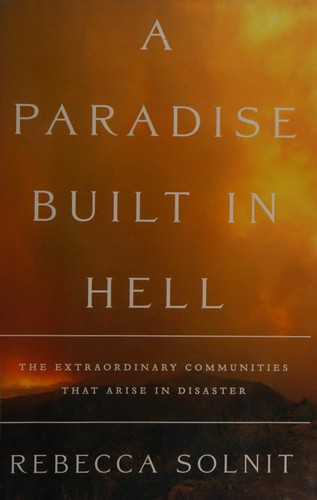
I picked this up expecting a fairly dry survey of historical disasters and got something closer to an argument I couldn’t stop turning over for weeks after finishing it. Solnit’s central claim is that in the immediate aftermath of catastrophe, ordinary people quickly form new communities of mutual aid and improvised generosity, not chaos, not looting sprees, actual functioning cooperation, while the authorities in charge tend to assume the opposite is happening and respond accordingly, sometimes violently. She’s got a name for that official reflex: elite panic. Once you learn the term you notice it everywhere in the news.
The historical material is genuinely fascinating even when the argument gets repetitive. I hadn’t known much about the Halifax explosion before this and it stuck with me more than the more famous case studies. The 1906 San Francisco earthquake, the Mexico City quake, 9/11, Katrina, she moves through all of them building the same case from different angles, and yeah, by the second half you feel the repetition, the same point about “official” disaster response being worse than the improvised one keeps getting hammered rather than developed further.
One reviewer with personal stakes in this stood out to me, someone from Harrisburg, Pennsylvania who lived through a flood there in 2011 when the Susquehanna hit around 25 feet against a normal depth of four, and reading Solnit’s ideas against a real firsthand account like that did more for me than another historical chapter would have. That’s the book working as intended, I think, it’s meant to reframe how you read your own experience of a crisis, not just archive other people’s.
Not everyone buys the argument, some read it as a political ramble dressed up as research, and there’s a fair critique buried in there about how she handles the temporary euphoria of crisis solidarity versus what actually sustains a community afterward. But even with its flaws this reshaped how I think about disaster coverage permanently. Hard to ask more of a nonfiction book than that.