book review · The Structure of Scientific Revolutions
The Structure of Scientific Revolutions by Thomas S. Kuhn
2025-11-17 · 3 min read
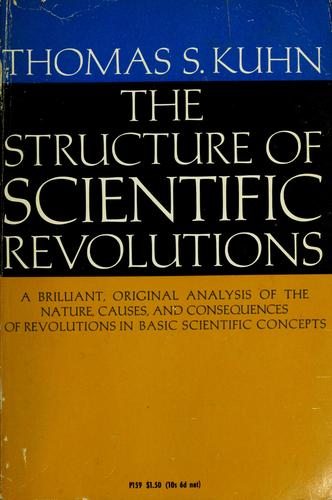
Everyone’s heard “paradigm shift” so many times it’s basically dead as a phrase, marketing decks stole it decades ago and wore it out. So it’s a genuinely strange experience reading the book it came from and realizing how careful and how narrow Kuhn’s actual argument is compared to the watered-down version that escaped into the culture.
The core idea, once you strip the jargon: science doesn’t progress in a smooth accumulating line. It runs inside a paradigm, a shared set of assumptions and methods everyone in the field just accepts, until anomalies pile up that the paradigm can’t explain away anymore. Then you get a crisis, and eventually a revolution, where the whole framework gets replaced rather than patched. Not evolution, replacement. That’s the part people flatten out when they use the phrase casually, they miss that Kuhn is describing something closer to a rupture than a gradual improvement.
What actually struck me reading it is how humbling the book is toward science as an institution. It forces you to notice how many assumptions working scientists carry around without examining, and how badly established norms handle real anomalies and edge cases when they show up. Kuhn is careful, almost defensively careful, to draw a line around this so it can’t be hijacked by cranks looking to justify pseudoscience or start some anti-establishment “counter cult,” and you can feel him doing that work in the prose, qualifying constantly, hedging exactly where a looser writer wouldn’t bother.
It’s terse. I won’t pretend otherwise, the language is dense and a little dry if you’re not already halfway into philosophy of science before you open it. But it rewards a slow read more than almost anything else on my shelf this year. A must-read, genuinely, not just a book people cite without finishing.